


Module 4A: Microbial Fermentation
Module Overview
Fermentation is one of the most fundamental biotechnological processes, underpinning food production long before the molecular basis of life was understood. In this module, students explore the organisms responsible for fermentation, their metabolic strategies, and how humans control these processes to obtain safe, consistent, and valuable products.
Unit 4A.1 – Microorganisms in Food Biotechnology
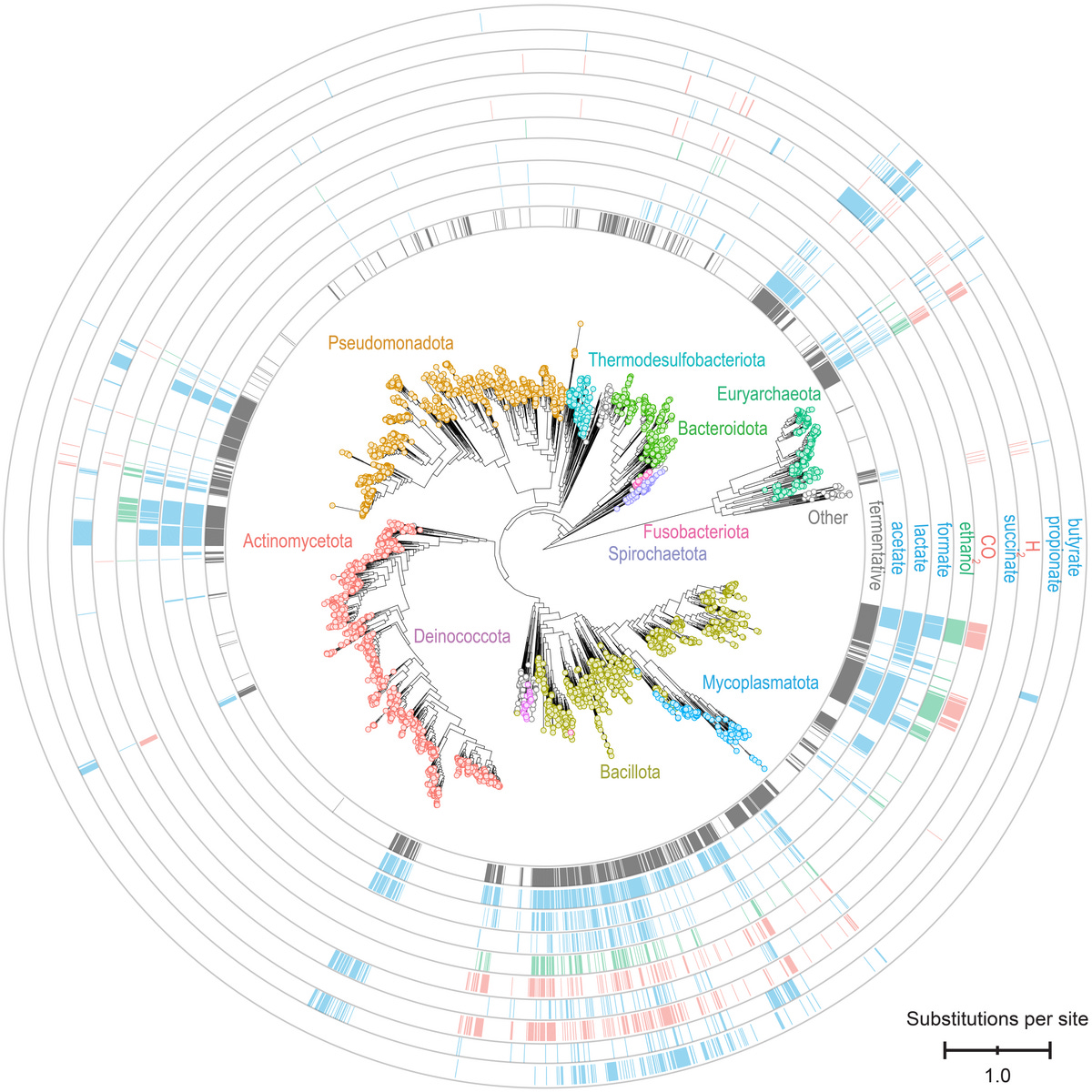
Image credit:
Microorganisms in food fermentation, Wikimedia Commons.
License: Public Domain (CC0)
This image shows phylogenetic tree of FERMENTERS: bacteria and archaea that can carry out some type of fermentation. Their end products are also highlighted. Figure modified from Hackmann (2024)
Microbes and Food Biotechnology
Food biotechnology relies on the intentional use of microorganisms to modify raw materials. Unlike food spoilage, fermentation is a controlled biological process that produces predictable outcomes.
The main microbial groups involved include:
1. Yeasts
Yeasts are unicellular fungi capable of fermenting sugars into alcohol and carbon dioxide.
Most widely used species: Saccharomyces cerevisiae
Key properties: rapid growth, tolerance to low oxygen, predictable metabolism
2. Lactic acid bacteria (LAB)
LAB convert sugars primarily into lactic acid.
Genera include Lactobacillus, Lactococcus, Streptococcus
Acid production lowers pH, inhibiting pathogens
3. Moulds
Filamentous fungi are used in specific fermentations (e.g. cheese ripening).
Produce enzymes that break down proteins and fats
Contribute to flavor, aroma, and texture
Why microorganisms are ideal for biotechnology
They reproduce quickly
Their metabolism is easily directed
They adapt well to controlled environments
Exercise (15-20 minutes)
List three fermented foods you regularly consume and identify the likely microorganism group involved.
Draw the chemical structures of the products of fermentation in the image above
Unit 4A.2 – Yeasts and Bacteria in Fermentation
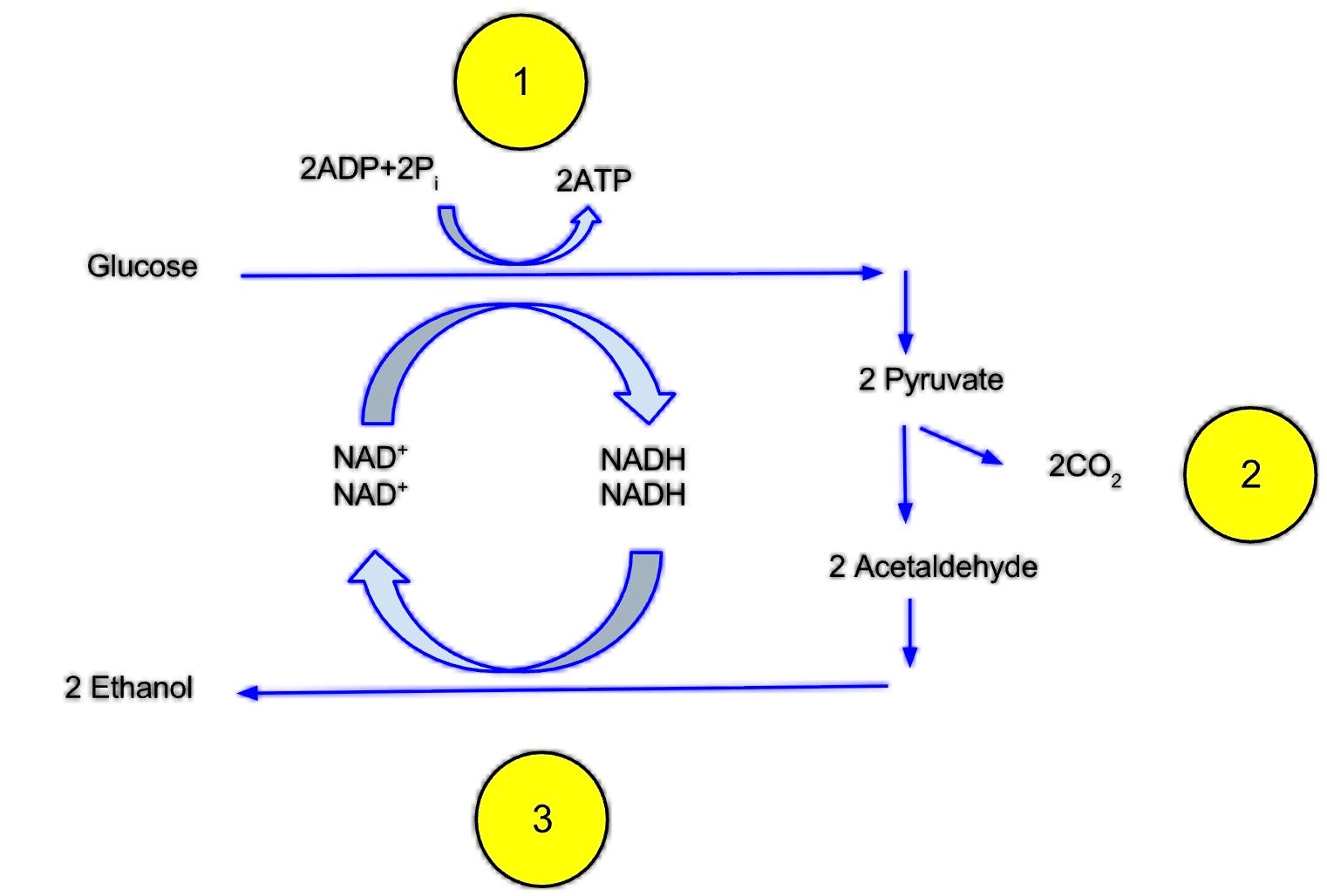
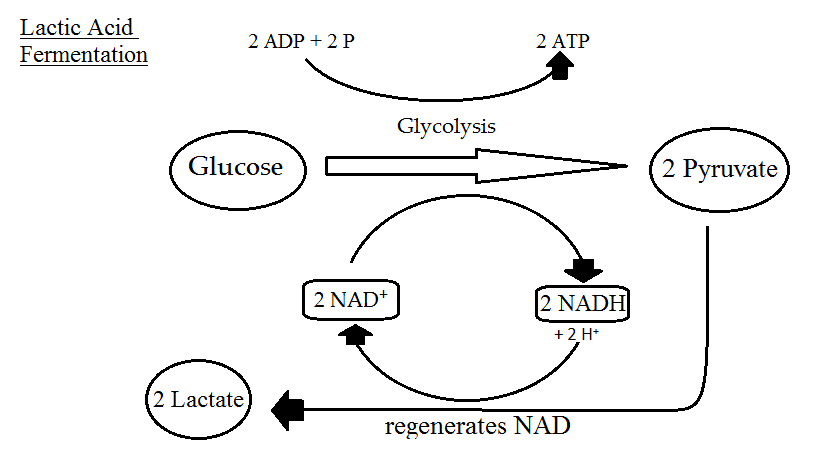
Image credit:
OpenStax Biology, Alcoholic and lactic acid fermentation pathways, OpenStax.
License: CC BY 4.0
Types of Fermentation
Although yeasts and bacteria may act on the same substrates (sugars), their metabolic outcomes differ significantly.
Yeast fermentation
Yeasts perform alcoholic fermentation, producing:
Ethanol
Carbon dioxide
This process:
Occurs in low-oxygen conditions
Is essential for bread, beer, and wine production
Bacterial fermentation
Lactic acid bacteria perform lactic acid fermentation, producing:
Lactic acid
No gas (in most cases)
This process:
Preserves food by lowering pH
Is essential for yoghurt, cheese, and fermented vegetables
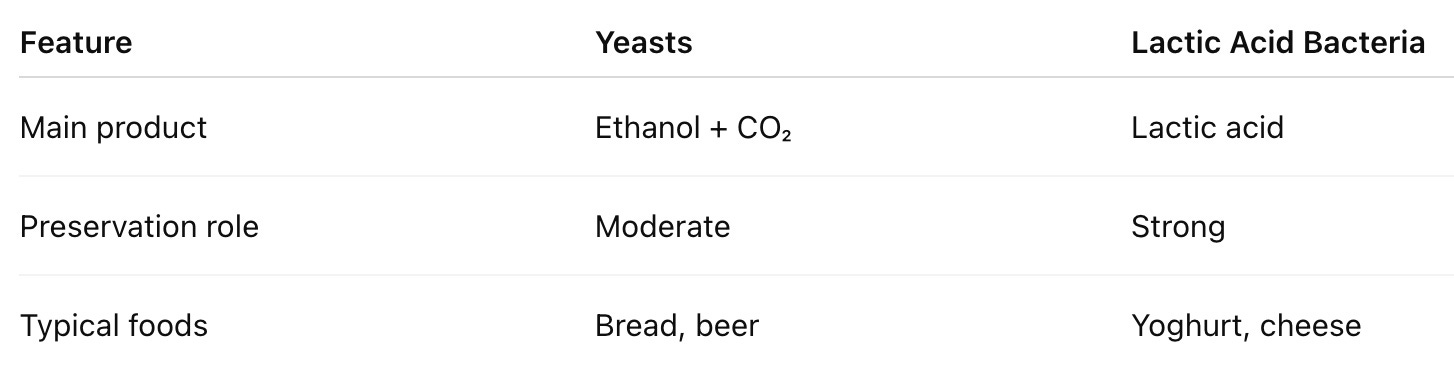
Key comparison
Think about it (5 minutes)
Why would lactic acid bacteria be preferred over yeasts for long-term food preservation?
Unit 4A.3 – Fermentation Metabolic Pathways
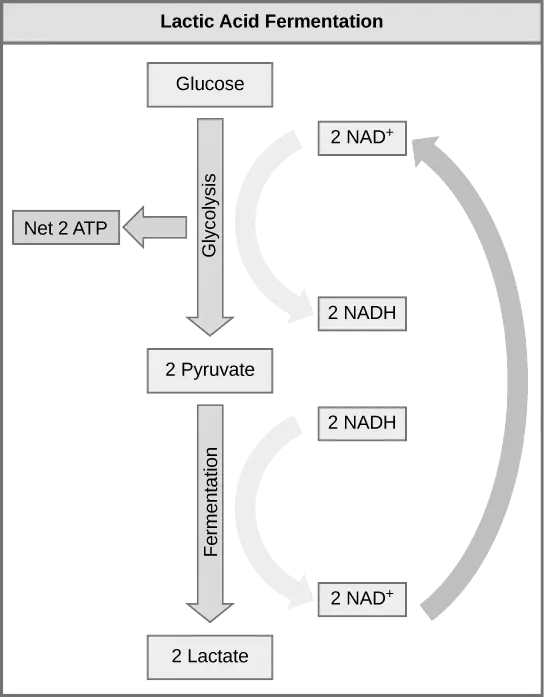
Image credit:
OpenStax Biology 2e, Glycolysis and fermentation, OpenStax.
License: CC BY 4.0
Core content
All fermentation pathways begin with glycolysis, a universal metabolic process.
Glycolysis
Converts glucose into pyruvate
Produces ATP (energy)
Generates NADH
Why fermentation is needed
In the absence of oxygen:
NADH accumulates
NAD⁺ becomes depleted
Glycolysis cannot continue
Fermentation:
Regenerates NAD⁺
Allows ATP production to continue
Two major pathways
Alcoholic fermentation → ethanol + CO₂
Lactic acid fermentation → lactic acid
Think about it (5–8 minutes)
Explain why fermentation is essential for the microorganism, not just useful for humans.
Unit 4A.4 – Control of Fermentation Processes
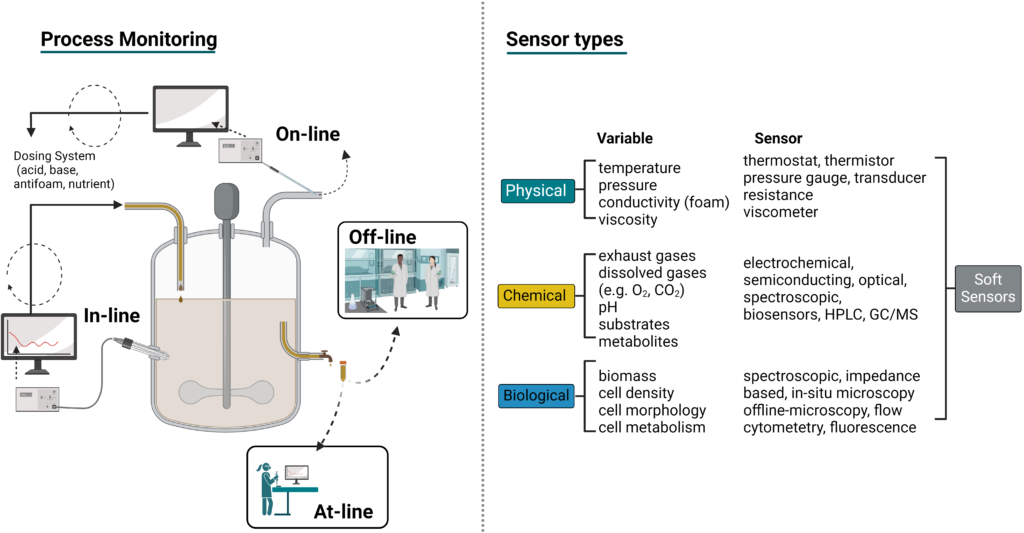
Image credit:
CNX OpenStax, Factors affecting fermentation, Wikimedia Commons.
License: CC BY 4.0
Fermentation outcomes depend on environmental control.
Key control parameters
Temperature: affects enzyme activity
pH: affects microbial growth and contamination
Oxygen: determines aerobic vs anaerobic metabolism
Substrate concentration: limits or enhances productivity
Consequences of poor control
Off-flavors
Low yield
Microbial contamination
Think about it (5–7 minutes)
What might happen if yoghurt fermentation is carried out at too high a temperature? Give 2 possible outcomes and explain why.